





Blog

Reimagined Celtic Rituals: Heritage & Candlelight
The Celtic imagination has long been captivated by light. Lighting has been a utilitarian and spiritual link between generations, from the massive bonfires that topped Irish hillsides at Beltane to the silent flicker of a single candle on an altar or windowsill.
Candle rituals have gained fresh life in recent years due to the renewed interest in ancestral customs in Ireland and other Celtic nations. These customs, which have been reimagined via art, spirituality, and heritage restoration, testify to both the past and the changing character of contemporary Celtic society.
This article examines the reclaiming of candlelight as a modern sign of connection, consciousness, and recall. Candlelight was originally associated with fire deities and then with Christian devotion.
1. The Ancient Fire: Celtic Light Rituals’ Beginnings
In Celtic life, fire was the elemental power that provided illumination long before wax and wicks. Fire was considered sacred because it connected human existence to divine cycles, heated dwellings, made tools, and cleansed gifts. The seasons were marked by fire festivals throughout the old Celtic calendar:
- October 31–November 1 is Samhain.
The line between the living and the dead was drawn at the Celtic New Year. To pay respect to ancestors and ward off wandering spirits, large community bonfires were built on hills.
In order to symbolize rebirth and protection from the gloom of winter, home hearth fires were extinguished and then reignited from the sacred community flame.
- February 1–2, Imbolc
Imbolc marked the arrival of spring and was dedicated to Brigid, the goddess of poetry, fertility, and smithcraft. Candles and fires were lit as symbols of cleansing, creativity, and regeneration.
A perpetual hearth fire or small candle, known as “Brigid’s flame,” was kept in many rural Irish homes as a health and prosperity benediction.
- Beltane (May 1)
Beltane was a celebration of life in full bloom and a festival of fertility and vigor. Cattle were led across twin bonfires to protect them from illness. To guarantee success and passion in the upcoming year, young people jumped over little fires.
- August 1st is Lughnasadh.
Lughnasadh commemorated the first fruits of the harvest and was named after the deity Lugh, who is the patron of skill and workmanship. Bonfires paid homage to the sun’s might, and people prayed for its ongoing blessing on families and farms.
Fire was more than just a component of these seasonal celebrations; it was the divine’s life force. Its light protected against bad luck, united communities, and reflected the never-ending cycle of rebirth and death.
2. The Christian Adaptation of “From Fire to Candle”
Christianity was introduced to a society that was already deeply rooted in respect for fire when it arrived in Britain and Ireland in the fourth and sixth centuries.
Early Christian missionaries reinterpreted that symbolism instead of denying it. As a symbol for Christ, the saints, and the Holy Spirit, fire turned into “light.”
- Light Blessings and Candlemas
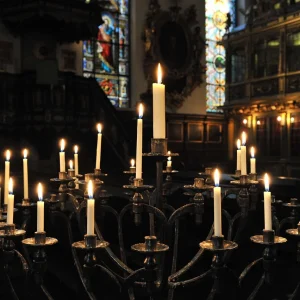
Aspects of Imbolc were replaced by the Candlemas feast, which was observed on February 2. After being blessed at church, people took candles home to use for protection during illness, labor, and storms.
As the goddess herself changed into St. Brigid of Kildare, a saint who nursed an immortal flame for generations under the care of nuns, the Christian “light of the world” blended in perfectly with Brigid’s fiery nature.
3. The Living Heritage of Candlelight
Candle rites have crossed religious lines in contemporary Ireland and other Celtic countries. Lighting a candle is still an act of respect, memory, and introspection, whether it is done in secular homes, Christian churches, or neo-pagan communities.
- Bringing Celtic Festivals Back
Celtic fire celebrations have been brought back to life in recent decades by neo-Druidic movements, historical organizations, and community festivals:
- Both the pre-Christian goddess and St. Brigid are currently honored at Kildare’s Imbolc celebrations. Workshops teach traditional crafts and candlemaking, and the community reignites a ceremonial flame.
- Beltane Fire Festivals, particularly in Edinburgh and rural Ireland, use lanterns and candles to mimic the traditional protective bonfires while fusing performance art with pagan mythology.
- In methods that integrate tradition with modern consciousness, Samhain Fire Ceremonies and lighted processions help individuals reestablish a connection with their ancestors.
The accessible modern successor to these ancient rituals, candlelight is softer than bonfire flame and has deep ancestral symbolism while being appropriate for urban living.
Revising Domestic Rituals
Traditional candle practices are still practiced in many Irish homes, frequently without being referred to as “rituals.” Modern manifestations of continuity with historical customs include a light in the window during Christmas, a flame lit in memory of a departed family member, or a candle put next to a picture on an anniversary.
These customs are being purposefully modified by younger generations, who are motivated by eco-spirituality and mindfulness movements.
In tiny home altars or seasonal celebrations, handmade beeswax candles, which are frequently purchased locally, are utilized to respect sustainability and legacy.
4. Light’s Significance in Celtic Philosophy
Why is the notion of light so ingrained in Celtic culture? The perspective of ancient Celtic spirituality, which placed a strong emphasis on connection and the holiness of the natural world, holds part of the solution.
- Balance and Duality
Fire was both constructive and destructive; it was a power that consumed and provided warmth for life. The opposites were a part of the same cycle in Celtic cosmology.
Darkness was the only thing that gave meaning to light. Candles are frequently used in rituals to symbolize times of transition, such as birth, death, seasonal change, or personal transformation, reflecting this duality.
- Inspiration and Enlightenment
The Awen, a flowing inspiration sometimes represented as rays of light, was adored by the Celts. Later Christian monks would refer to this same illumination as grace or enlightenment. Bards, poets, and seers were all searching for the spark of divine creation.
Therefore, lighting a candle turns into a tangible metaphor for discovering one’s inner wisdom.
- Community and Connection
Tribes were formerly assembled by communal fire; today, families or congregations are gathered by candlelight.
A silent continuation of the ancient tribal hearth, shared light represents shared purpose in everything from candlelit Christmas celebrations to community vigils.
5. Making Candles and Using the Irish Fireplace
- Understanding the material culture that underpins candle ceremonies is helpful in order to properly appreciate them. Traditionally, Irish homes used beeswax or tallow (animal fat) to make their own candles.
- Although beeswax was expensive and was only used in churches or affluent households, it was valued for its pleasant aroma and clean burn. Despite being less expensive, tallow candles smoked a lot and needed to be constantly trimmed.
- Candlemaking developed into a cottage business in the 18th and 19th centuries. Livestock fat was generated by rural communities, who continuously poured it into molds or dipped wicks to create tapers. Making candles might become a ceremonial activity, carried out during specific moon phases or seasons that are thought to promote light and wealth.
6. The Contemporary Rebirth: Mindfulness, Art, and Spirituality
Candle rites are being reinterpreted through contemporary perspectives as interest in eco-conscious living and Celtic spirituality increases:
- Conscientious Lighting
Both Celtic and international traditions include the practice of lighting candles for meditation or intention-setting. In an overstimulated world, the gentle flame promotes presence and attention, which is a simple but effective act of grounding.
- Identity and Heritage
Candlelight traditions help many people in the Irish diaspora rediscover their ancestry. Even across seas, a solitary candle on Samhain or St. Brigid’s Day might act as a symbolic connection to one’s roots and birthplace.
- Adaptation to Interfaith
Candle ceremonies are available to people of many faiths because of the openness of Celtic spirituality. Christians may pray via Mary, pagans may call forth Brigid, and nonreligious people may burn lights in remembrance, healing, or peace. The deed communicates in the universal language of light, which transcends orthodoxy.
- Expression of Art
Candlelight has been used in performance and installation art by contemporary artists in Scotland and Ireland. Celtic themes of change and recollection are frequently incorporated into candlelit labyrinth walks, poetry readings, and exhibits, demonstrating how tradition can spur creativity.
7. Symbolic Activities: Contemporary Candlelight Uses
Celtic candle rites that have been reinvented today are varied and unique. These are a few of the most prevalent types:
The Intentional Candle
In keeping with the customs of Imbolc and Brigid, people light a solitary candle to symbolize inspiration and development at the beginning of the year or a creative endeavor.
Ancestral Candle
Families place candles on windowsills or altars in their homes at Samhain to honor each ancestor or lost loved one. This is reminiscent of the old idea that ghosts are securely guided home by fire.
The Light Circle
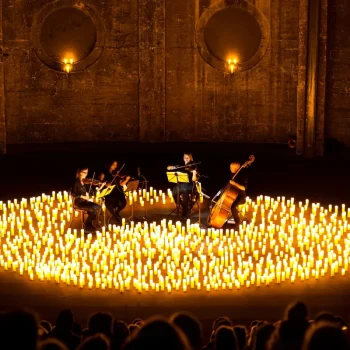
In a contemporary resemblance to Beltane’s communal fires, attendees at community events form a circle and light candles from one another to represent continuity and togetherness.
The Healig Flame
When someone is unwell or suffering, they light candles that were blessed or manufactured during Candlemas. In certain communities, a communal candle is kept lit for individuals in need during “healing vigils.”
Candlelight for the Environment
Candles manufactured from natural materials are symbolic of earthly balance in sustainability initiatives. Lighting them during equinoxes and solstices strengthens the connection between people and the natural world.
8. Celtic Candlelight: Its Beauty and Ambience
- Both environment and symbolism contribute to the enchantment of candlelight. The warm glow of a candle changes places in Celtic nations, where the environment is softened by lengthy evenings and damp weather.
- It invokes song and storytelling, connection, and the hearth. Candlelight serves as the contemporary hearth in a culture that historically gathered around fire for warmth and myth. It is private, introspective, and social.
- Stone cathedrals, rural cottages, and even modern flats feature this architectural style, with candles flickering in recesses, next to family photos, or on windowsills with a view of the rain. The scent of beeswax, the soft crackling, and the shine against old stone are all sensory experiences that evoke both spiritual solace and cultural nostalgia.
9. The Harmony of the Past and the Present
Reimagining Celtic candle traditions involves reinterpretation rather than duplication. Contemporary practitioners strike a balance between honoring ancestors’ customs and meeting modern demands.
- Nowadays, safety and sustainability have an impact on practice; in public rites, electric candles frequently take the place of open flames.
- Diverse ideologies are welcomed in these ceremonies thanks to inclusivity.
- Education through museum exhibits and folklore studies aids in placing old symbols in a realistic perspective without romanticizing them.
Instead of going back to a fictitious past, the aim is to let ancestors’ knowledge guide contemporary decisions.
10. The Eternal Flame: The Durability of Candlelight
- The paradoxical nature of candlelight—fragile but enduring, fleeting yet eternal—may be the source of its timeless allure in Celtic culture. The act of igniting a flame is old and ongoing, even if it only exists in the present.
- The echo of many generations who gathered around light to worship, rejoice, and remember is carried by every candle lit today, whether in a church, a kitchen, or a festival field. Candle rituals provide connection and purpose in an era of technology and artificial light.
- They slow down time, serve as a reminder of cycles, and help us rediscover the primordial quality that has always characterized human existence in Ireland and elsewhere. Candlelight serves as a bridge between the holy and the secular, the ancient and the modern, and the living and the dead.
Conclusion
“Celtic Rituals Reimagined” is about rejuvenation rather than just nostalgia. Ireland and the larger Celtic community are learning how to incorporate their heritage into everyday life via candles.
Echoes of mountaintop fires, monastery vigils, and the silent guardianship of innumerable homes preserving faith and memory are contained inside each flickering flame.
A society that respects its past while changing with the modern is reflected in the redesigned candle ritual, which is modest, lovely, and timeless. It asks us to take part as a live continuation of history rather than as its spectators.
Similar articles
Audio-guided candle rituals facilitate “Sensory Entrainment,” a process where amber light (1800K-2400K) and alpha-wave audio frequencies work together
Restful Nights: A Sleep Ritual with Candlelight for Better Sleep Modern life rarely slows down on its own.
Making a candlelight meal is always lovely, but adding Irish friendliness, warmth, and tradition makes the evening
A single flame can serve as a symbol, a ceremonial instrument, and a focal point for intention
Candle Meditation: A Soothing Practice for Winter Nights Many of us find ourselves yearning for warmth, light, and
In Ireland, Christmas has long been a time for cozy get-togethers, fragrant homes, and warm lighting. In